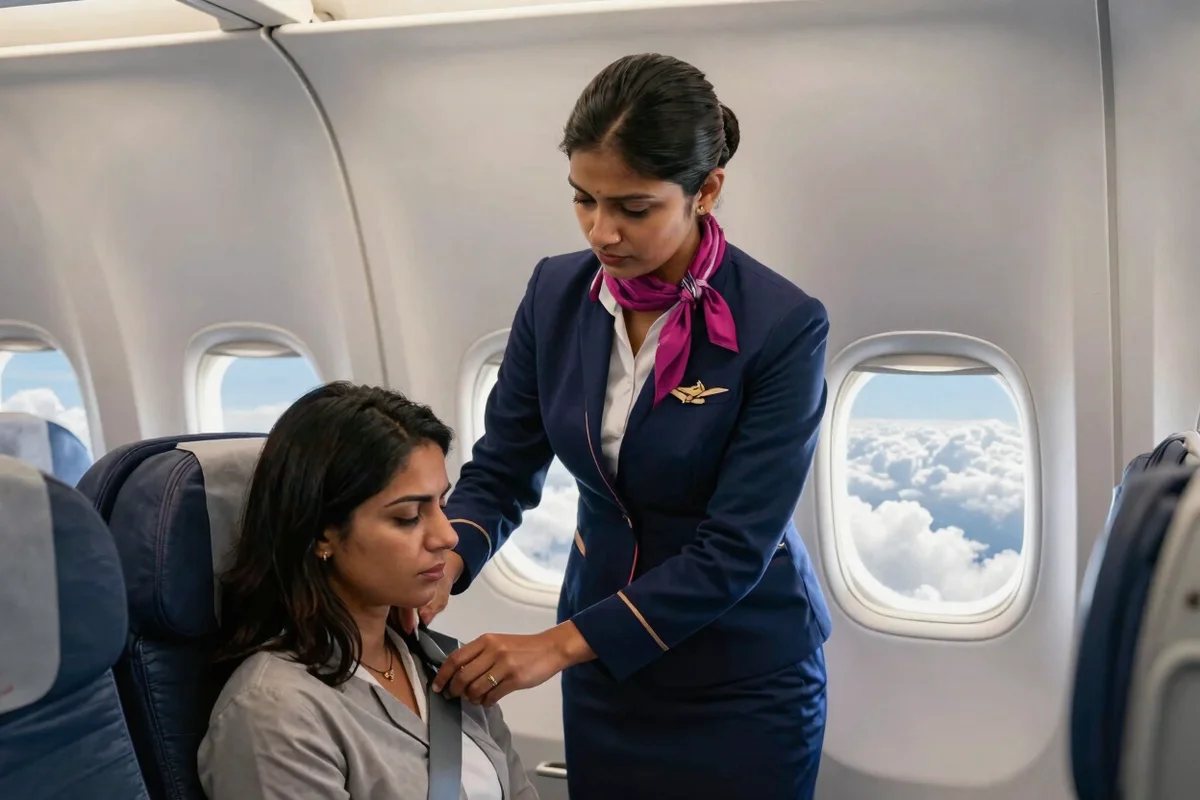
Turbulence is one of the most common fears among air travellers. For cabin crew, understanding it is part of the job: they need to stay calm, keep everyone safe and reassure nervous passengers. Here is a simple explanation.
What causes turbulence?
- Weather: clouds, storms and rising warm air on hot days
- Clear-air turbulence: changes in wind speed at high altitude, often with no visible clouds
- Mountains and terrain: air flowing over hills and mountains becomes uneven
- Wake turbulence: disturbed air left behind by other aircraft
Is it dangerous?
Passenger aircraft are built and tested to withstand turbulence far stronger than anything normally experienced on a flight, and pilots get weather information to avoid the roughest areas. The main risk is to people who are not seated with their seatbelt fastened, which is why crew take the seatbelt sign so seriously.
What cabin crew do during turbulence
- Make a clear announcement asking passengers to return to their seats and fasten seatbelts
- Check that seatbelts are fastened and the cabin is secure
- Stop service and secure trolleys and hot drinks
- Take their own seats and fasten their harness when instructed
- Reassure nervous passengers calmly once it is safe
Calming a nervous flyer: what crew say
- "This is normal and the aircraft is designed for it."
- "Please keep your seatbelt fastened and you are perfectly safe."
- "I will check on you again in a few minutes."
Learn this at RiseUp
Safety and emergency procedures, announcements and passenger handling are part of the AHTM cabin crew diploma. Students practise turbulence announcements in English and Hindi so they sound calm and confident. Situation questions like this also come up in interviews; see our interview questions guide.
Talk to a RiseUp counsellor: free career counselling and grooming assessment at Chandkheda, Navrangpura, Nikol, Vadodara or Siliguri (Mon–Sat, 10 am – 7 pm). Book your free session, and parents are welcome too.
Frequently asked questions
Is turbulence dangerous for a plane?
Commercial aircraft are designed to handle turbulence safely. Most injuries happen when people are not wearing seatbelts, which is why crew insist on them.
Why do cabin crew stop service during turbulence?
To keep passengers and crew safe from falling objects and hot drinks, and to make sure everyone is seated and belted.
Do cabin crew learn about turbulence in their course?
Yes. Safety training covers turbulence procedures, securing the cabin, announcements and calming nervous passengers.